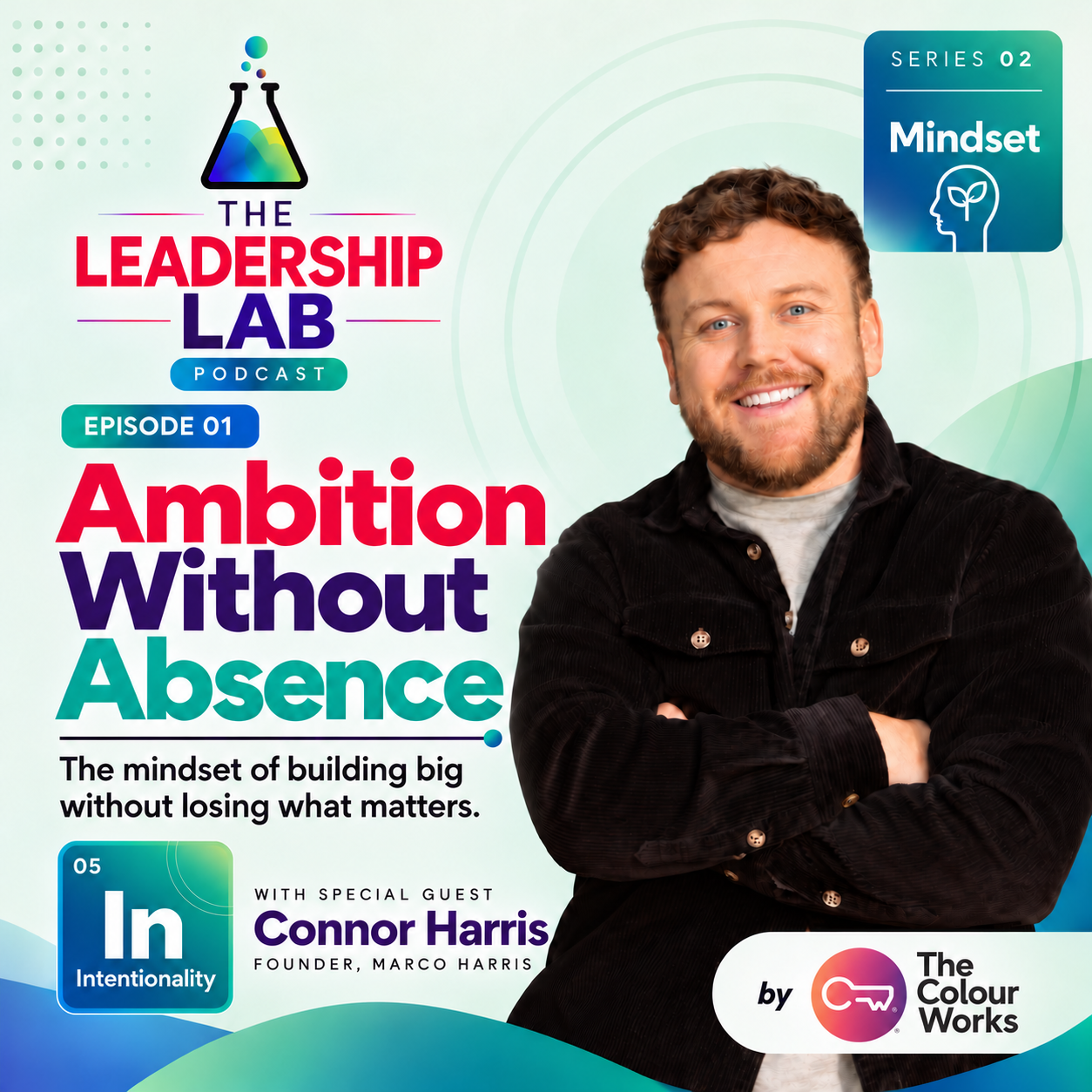

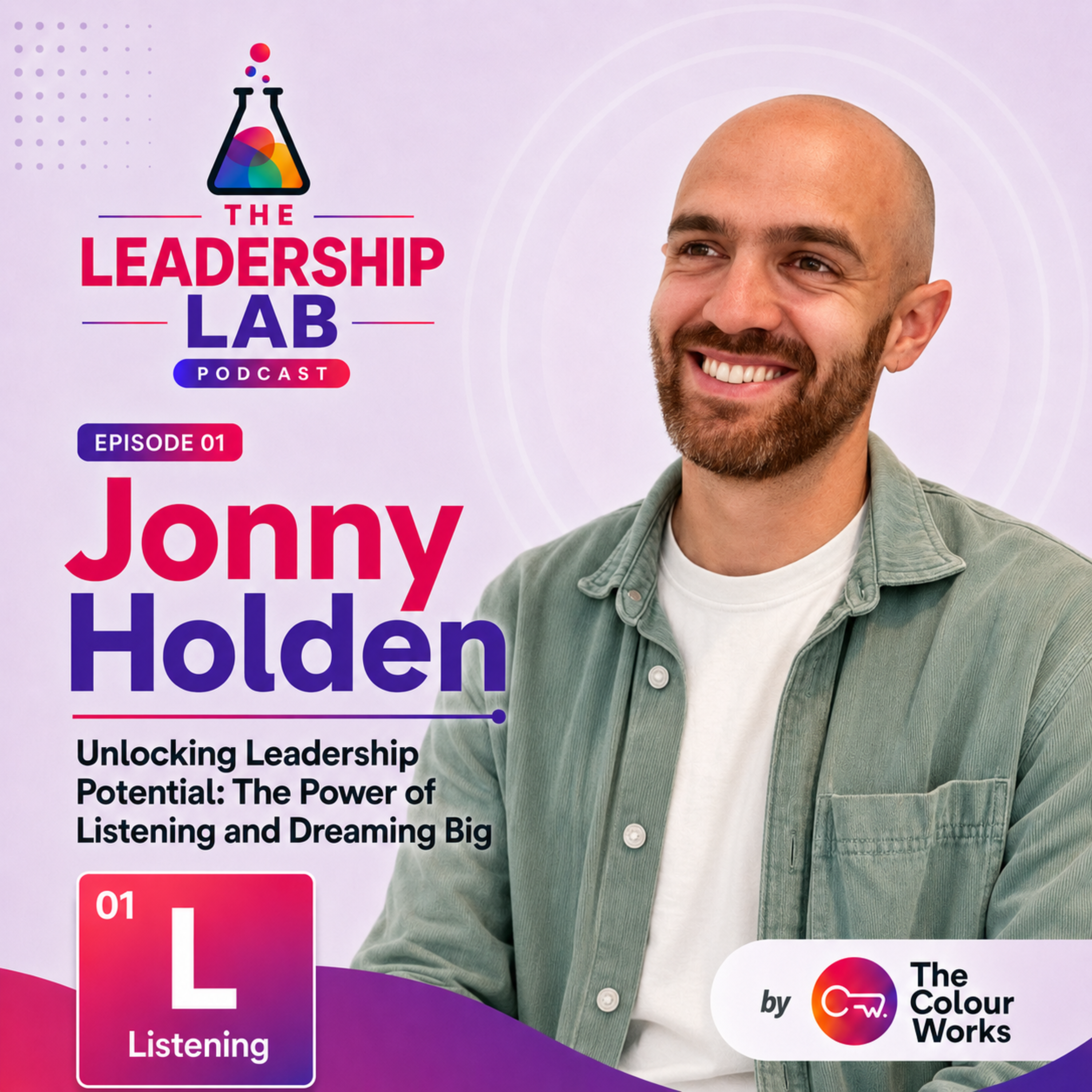
Leadership Lab Ep1 - The Power of Listening and Dreaming Big!
By The Colour Works on Jun 2, 2026
The Leadership Lab: Exploring Human-Centric Leadership Insights
Welcome to the first episode of the Leadership Lab, a podcast dedicated to exploring leadership through a real human lens. In this inaugural episode, hosts Luke and Lucy dive into the complexities of leadership, focusing on the significance of authenticity and human connection.
With Johnny Holden as their guest, a mindset coach and psychotherapist, this discussion challenges conventional thinking about leadership and explores what can happen when leaders create the space to genuinely listen, dream and connect with the people around them.
About Johnny Holden
Johnny Holden is a mindset coach and psychotherapist specialising in helping leaders and executives unlock their potential. With a background in acting and a passion for understanding human psychology, Johnny brings a unique perspective to leadership.
His journey from the performing arts to psychotherapy and leadership coaching allows him to guide individuals in navigating their personal and professional challenges. It also demonstrates how experiences from seemingly different careers can contribute to the way we understand and work with people.
The Impact of Parenthood on Leadership
Johnny shares his transformative journey from a successful acting career to becoming a mindset coach. After the birth of his child, he realised that his priorities had shifted dramatically.
Parenthood instilled a sense of responsibility that influenced his career decisions. He discusses how the transition was not just about changing professions but reshaping his identity.
This raises an interesting question for leaders about the relationship between who we are and what we do.
Leadership roles can become a significant part of our identity. Titles, responsibilities and professional success can influence how we see ourselves. But when our identity becomes too closely connected to our job, changes at work can feel deeply personal.
Johnny's journey highlights the value of understanding ourselves beyond our professional roles and recognising how significant life experiences can reshape our priorities and perspective.
Authenticity and Vulnerability in Leadership
In the conversation, Johnny highlights the importance of authenticity in leadership. He argues that leaders often struggle with their identities, especially when their roles become intertwined with their self-worth.
Instead, Johnny advocates for leaders to embrace their humanity and allow appropriate vulnerability to show.
This can challenge traditional ideas about leadership. Leaders may feel they are expected to project certainty, confidence and control at all times. Yet acknowledging that we don't always have the answer, sharing something that hasn't gone to plan or being honest about a challenge can create stronger human connections.
Vulnerability doesn't mean sharing everything or removing professional boundaries. It means recognising that leadership is human.
When leaders are prepared to share their own learning and failures, they can also give others permission to speak more openly about theirs.
The Role of Listening in Effective Leadership
Listening is another central theme in Johnny's approach to leadership.
Most leaders would probably say they listen to their people. But genuinely listening requires more than simply giving someone the opportunity to speak.
It means creating enough space to understand what they are really saying without immediately offering a solution, defending a decision or moving the conversation on.
Leaders can develop their listening by becoming more curious:
- What am I hearing?
- What might I be missing?
- What assumptions am I making?
- Have I understood this person's perspective?
- What happens after I receive feedback?
That final question is particularly important.
A listening culture isn't created simply because an organisation asks people for their views. People need to see evidence that they have been heard, whether that means action is taken or leaders explain honestly why something can't change.
Creating Space for People to Dream
Johnny also explores the importance of dreaming and vision.
In organisations focused on delivery, targets and immediate priorities, creating space to dream can easily fall down the agenda. Yet giving people the opportunity to imagine what could be possible can generate new ideas, energy and ambition.
And those conversations shouldn't be restricted to senior leadership teams.
People at every level of an organisation can have valuable ideas about what the future could look like.
Leaders don't always need to provide the dream themselves. Sometimes their role is to create the environment in which other people feel able to share theirs.
Questions such as "What would you love to see happen?", "What could this team become?" or "What would we try if we weren't constrained by how we've always done things?" can open up very different conversations.
Listening and dreaming are therefore closely connected. Leaders first need to create space for people to think, then genuinely listen to what emerges.
"My hypothesis is that the majority of people don't dream big enough — and therefore, because they don't dream big enough, they accept circumstances or attitudes that are either unchallenged or cause them to feel unsatisfied with life."
Jonny Holden
The Interplay of Coaching and Therapy
Johnny discusses the relationship between coaching and therapy, emphasising the value of understanding psychological principles when working with people.
His perspective highlights how our emotional well-being, past experiences and sense of identity can influence the way we behave at work.
For leaders, this doesn't mean becoming therapists. It does reinforce the importance of recognising that people bring far more than their job title or professional skills into the workplace.
Effective leadership requires appropriate boundaries while also recognising the human being behind the role.
This human-centric approach encourages leaders to become curious about people rather than assuming the same leadership approach will work for everyone.
Building a Culture That Genuinely Listens
Johnny's ideas also offer some practical ways leaders can begin creating a more listening-focused culture:
- Ask open questions: Encourage exploration rather than seeking confirmation.
- Create space before responding: Resist the temptation to immediately provide the answer.
- Invite different voices: Notice whose perspectives are being heard and whose may be missing.
- Check your understanding: Don't assume you have interpreted someone's meaning correctly.
- Act on feedback: Show people what has happened as a result of their contribution.
- Create time to dream: Give teams opportunities to step beyond immediate priorities and consider what could be possible.
- Share your own learning: Appropriate vulnerability can demonstrate that mistakes and development are part of working life.
Key Takeaways
- Embrace Authenticity: Leaders who are comfortable being human can create stronger connections with their teams.
- Listening Can Be Developed: Genuine listening requires curiosity, attention and a willingness to understand before responding.
- Create Space to Dream: Leaders should encourage people at every level to share their aspirations and ideas for the future.
- Use Vulnerability Thoughtfully: Sharing failures and lessons learnt can create trust and encourage greater openness.
- Separate Identity from Role: Leadership may be part of who you are, but your job title doesn't need to define your identity.
- Listen and Act: Organisational culture benefits when people see evidence that their voices have genuinely been heard.
- Recognise the Whole Person: Understanding the human being behind the role can help leaders create more meaningful relationships.
You May Also Like
These Related Stories
Leadership Lab Ep4 - Would You Follow You?
Leadership Lab Ep2 - The Curious Leader