
Leadership Lab Ep3 - Leading Without Losing Yourself
By The Colour Works on Aug 12, 2026
How to Cultivate a Values-Driven Culture in Large Organisations: Insights from IKEA's HR Practices
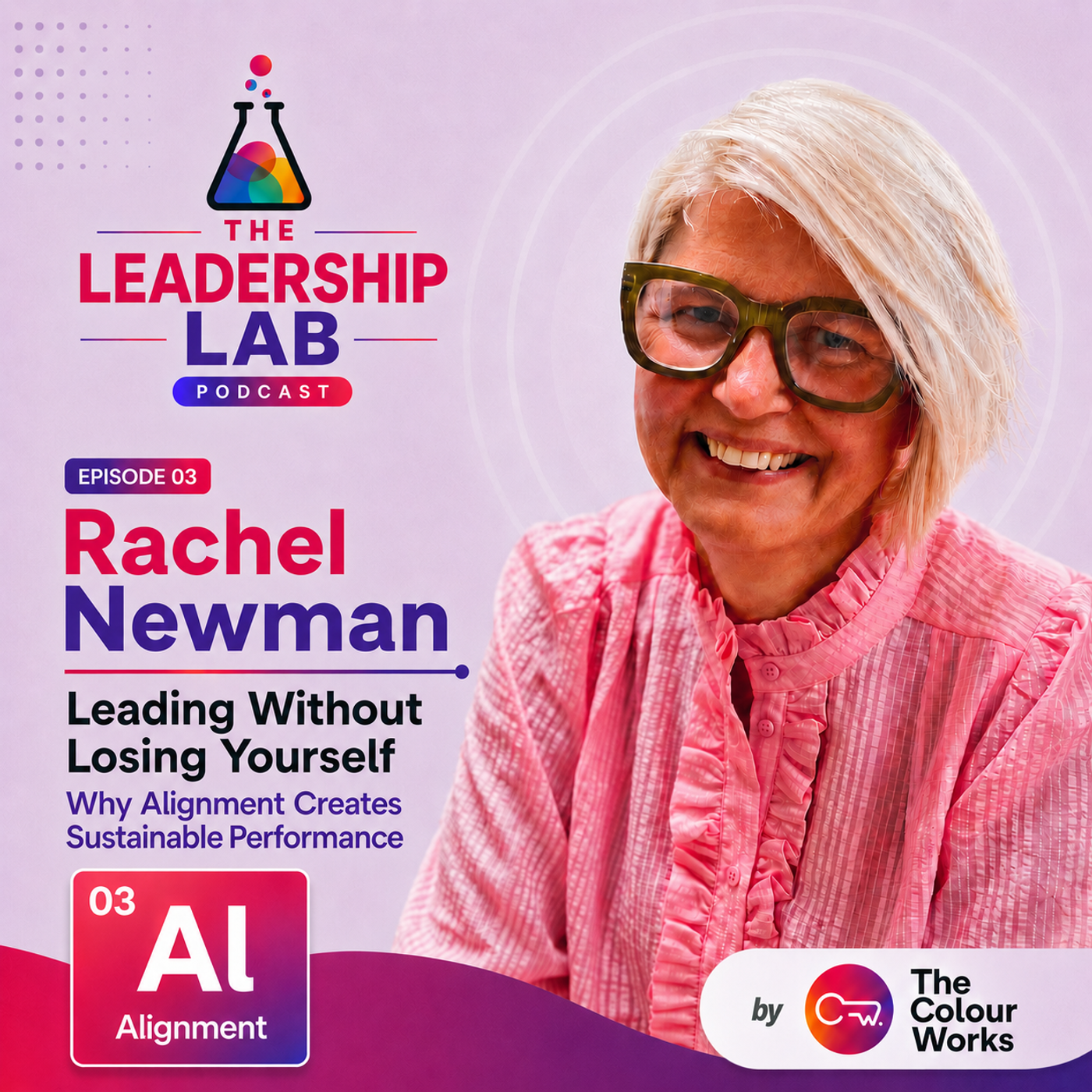
In this episode of The Leadership Lab, Luke and Lucy are joined by Rachel Newman, founder of Stour People Practice, to explore what it really means to lead in alignment with who you are. Rachel shares her journey from a 30-year career in HR, including senior roles across IKEA, the arts sector and the RNLI, to stepping away from a traditional senior leadership path and redefining success on her own terms.
Together, they discuss values-led leadership, the myth of busyness, the pressure to keep proving yourself, and why sustainable performance starts with understanding what really matters to you.
In today’s competitive landscape, creating a strong, values-driven culture within an organisation is crucial for sustained growth and employee satisfaction. In this post, we'll explore the key insights from an engaging conversation with Rachel Newman, a seasoned HR leader with extensive experience in shaping organisational culture, particularly during her time at IKEA. This discussion reveals how values can guide actions and decisions, fostering a workplace where employees feel valued and engaged.
Understanding the Importance of Values in Leadership
The foundation of any successful organisation lies in its values. Rachel emphasises that strong values not only guide employee behaviour but also shape the overall culture of the workplace. At IKEA, the values articulated by founder Ingvar Kamprad were not just words; they were lived experiences that influenced every aspect of the business. This alignment between personal and organisational values creates a sense of purpose and belonging among employees.
During her time at IKEA, Rachel witnessed firsthand how these values were communicated and embodied throughout the organisation. For instance, decisions were made not just based on profitability but also on their alignment with IKEA’s mission to improve everyday life for the many people. This holistic approach encouraged employees to think beyond their immediate roles and understand the broader impact of their work.
From Written Values to Lived Behaviours
One of the challenges for any organisation is ensuring that values don't simply become words on a wall. For values to genuinely shape culture, people need to understand what they look like in practice.
This places an important responsibility on leaders. Employees notice the behaviours that leaders demonstrate, recognise and reward. When these behaviours are consistent with the organisation's stated values, they help reinforce what really matters.
A useful question for leaders to consider is: would our people recognise our organisational values from the way we behave every day?
The Role of Communication in Reinforcing Culture
Effective communication is vital for reinforcing an organisation’s values. Rachel shared that IKEA employed a comprehensive communication strategy to ensure that every employee understood and embraced the company's values. This included regular training sessions, workshops, and clear messaging from leadership. The aim was to create a culture where everyone felt empowered to contribute to the organisation’s goals.
For example, during the opening of IKEA's Moscow store, Rachel helped train Russian managers who were brought to the UK. This initiative was more than just about transferring knowledge; it was about instilling IKEA's values in a new market. By immersing these managers in the IKEA culture, the organisation was able to build a consistent experience for customers, regardless of location.
This example demonstrates an important distinction. Communicating culture is one thing; experiencing culture is another. Giving people opportunities to see values demonstrated in practice can help translate abstract organisational principles into behaviours they can understand and adopt themselves.
Encouraging Employee Engagement Through Shared Purpose
A values-driven culture fosters higher levels of employee engagement. Rachel highlighted that when employees resonate with the company’s mission, they are more likely to go above and beyond in their roles. At IKEA, this was evident in how teams collaborated on projects, often exceeding their own expectations.
Additionally, Rachel pointed out that a clear sense of purpose can inspire innovation. Employees who feel connected to a greater mission are more likely to contribute ideas and solutions that align with the organisation’s values. This not only enhances the work environment but also drives business success.
"I think leadership maturity comes when we stop trying to prove who we are and we start aligning with it"
Rachel Newman
Why Shared Purpose Matters
Purpose helps people connect their individual contribution to something bigger.
When employees understand not only what they are being asked to do but why it matters, it can strengthen ownership, collaboration and engagement.
For leaders, this means continually making the connection between:
Purpose → Values → Behaviours → Everyday Decisions
Rather than treating organisational purpose and values as separate initiatives, the two can work together to give employees a clearer understanding of both where the organisation is heading and how people are expected to work together to get there.
Building a Values-Driven Culture in Practice
The experiences Rachel shares offer some useful questions for leaders looking at their own organisational culture.
Consider:
- Do our people understand what our values mean in practice?
- Can employees see leaders consistently demonstrating those values?
- Are our values reflected in the decisions we make?
- Do our onboarding and development programmes help people experience our culture?
- Are employees encouraged to challenge behaviours that don't align with our values?
- Do people understand how their role contributes to our wider purpose?
These questions help shift the conversation from "What are our values?" to the potentially more important question of "How well are we living them?"
Building a Lasting Impact
In summary, the conversation with Rachel Newman provides valuable insights into how large organisations can cultivate a values-driven culture. By emphasising the importance of values, communication, and shared purpose, leaders can create an environment where employees feel empowered and engaged.
To implement these practices in your organisation, consider the following steps:
- Articulate Core Values: Clearly define your organisation’s values and ensure they are communicated effectively.
- Embed Values in Training: Integrate values into onboarding and ongoing training programmes to instil them in the company culture.
- Encourage Open Communication: Foster an environment where employees can share their ideas and feedback openly.
- Recognise and Reward Alignment: Acknowledge employees who embody the company’s values in their work, reinforcing the importance of these principles.
By taking these steps, organisations can not only enhance employee satisfaction but also achieve sustainable growth and success.
Lab Notes
Key Takeaways
- Values need to be lived, not simply stated. Strong organisational cultures translate values into recognisable everyday behaviours.
- Communication reinforces culture. Consistent messaging, training and leadership behaviour help people understand what organisational values mean in practice.
- Shared purpose can strengthen engagement. When people understand how their contribution connects to something bigger, they are more likely to feel ownership of the organisation's success.
- Leaders are important culture carriers. What leaders demonstrate, recognise and reward sends powerful signals about what really matters.
- Culture needs to scale with the organisation. IKEA's approach demonstrates how cultural immersion can help organisations retain a shared identity as they expand into different teams, locations and markets.
You May Also Like
These Related Stories
Leadership Lab Ep4 - Would You Follow You?
Leadership Lab S2 Ep1 - Ambition without Absence